
Madison Township City Directory Collections
A Madison Township city directory search works best when you start with the name and the place. Use them as they were printed at the time. Old entries may sit under Groveport or Canal Winchester. They may use a rural delivery label, or a simple road name rather than the modern township heading. Columbus Metropolitan Library gathers digitized directory books, phone directories, microfilm, maps, and local-history help in one place. County recorder files can then confirm whether a promising entry truly belongs to the person you want. Census material and probate records can do the same. Treat every entry as a dated lead. Then compare it against another record before you trust it.
| Collection layer | Useful years | Where held | How to use it |
|---|---|---|---|
| Columbus business and city directories | 1840s forward; 1881 is the clearest township bridge | Columbus Metropolitan Library Local History and Genealogy | Physical shelves, microfilm, and selected digital volumes |
| Franklin County and vicinity phone books | 1910, 1914, 1925, 1926, 1936, 1944 and 1945 among documented runs | CML Digital Collections | Free scanned volumes; confirm the printed locality |
| Street-oriented city aids | 1917–18 and 1929–30 guides; 1926 Columbus phone book | CML collections | Useful for Columbus addresses, not a complete rural-township reverse run |
| Local-history companions | Township history, census, newspapers, cemetery material | CML, FCGHS, archives, and township channels | Use to test a directory lead and fill a missing year |
Start on one shelf. CML’s digitized city-directory collection anchors this Madison Township city directory work, and it aims to cover library holdings reaching back to the 1840s.
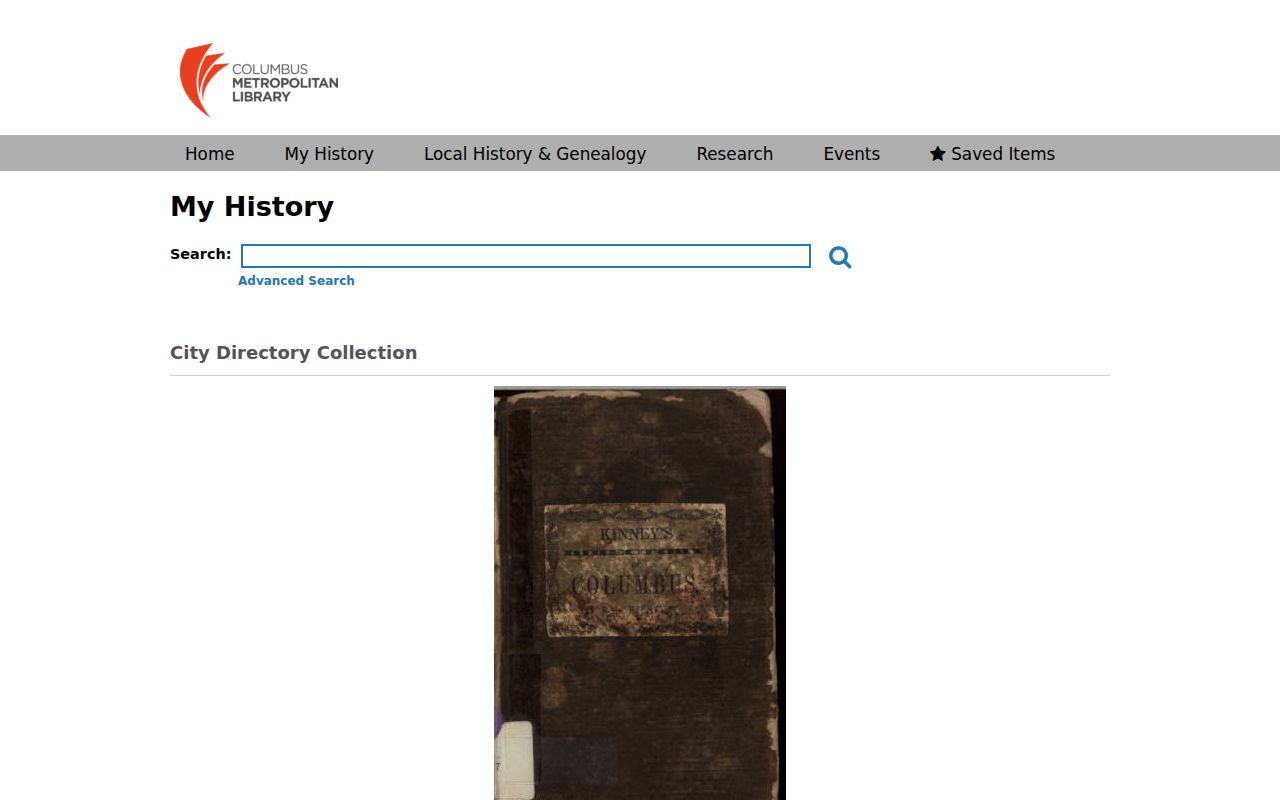
Madison Township City Directories at CML
Columbus Metropolitan Library Local History and Genealogy sits on the third floor of the Main Library. The address is 96 S. Grant Ave., Columbus. It holds more than 85,000 books and microfilm. Those holdings include a self-service Franklin County city-directory collection, maps, yearbooks, newspapers, and information files. No appointment is needed to browse. A consultation can be booked, though. That helps when an online hit needs a neighboring year, an abbreviation key, or a newspaper and census check outside the directory volume.
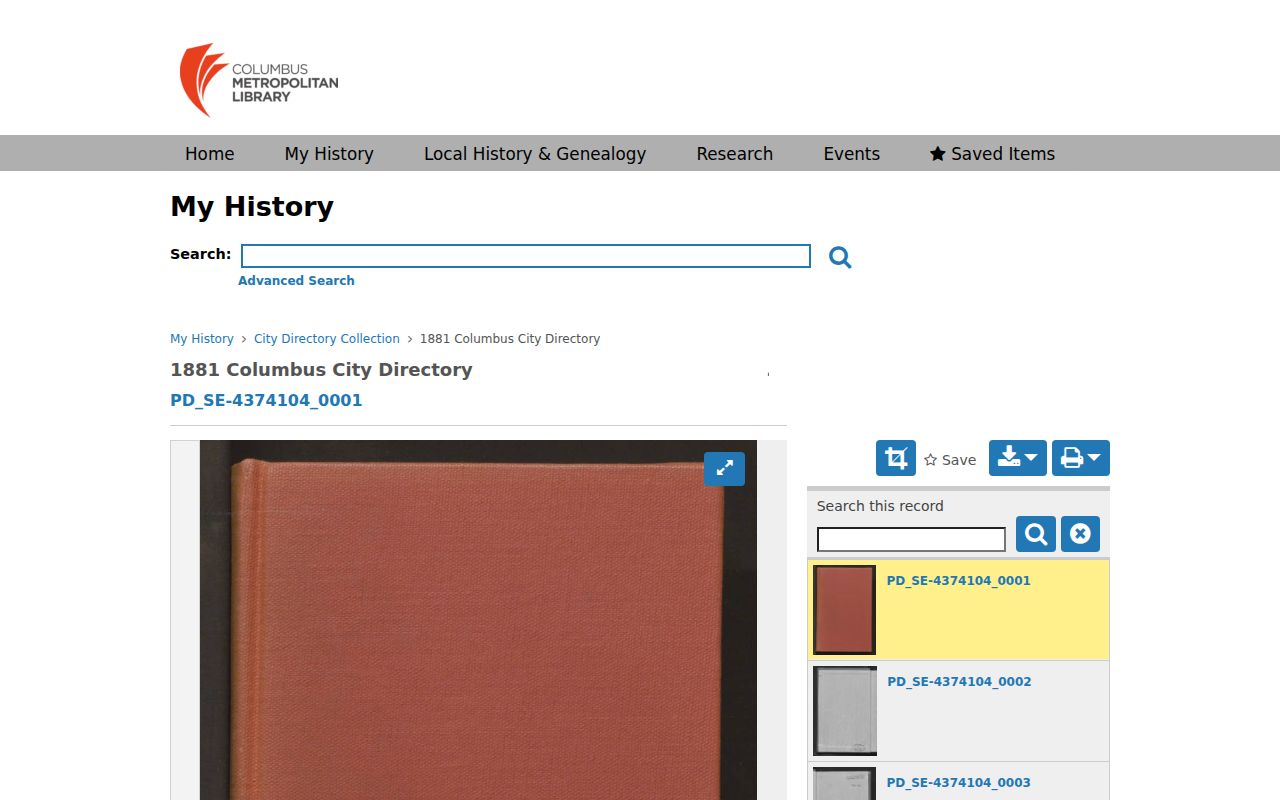
One volume earns special attention. The 1881 Columbus City Directory record states in print that it covers Columbus, Franklin County. That includes the townships and what became the suburbs. The wording makes it a stronger directory bridge for Madison Township than any city-only title with no locality evidence.
Search the place as printed. Try Madison Township, Groveport, Canal Winchester, Winchester, Wert’s Grove, Rarey’s Port, Middletown or Middleton, Oregon, a road name, P.O., and R.F.D. labels. Historic lists did not use today’s boundaries consistently.
Groveport Names in Township Directories
Geography explains many missing names. Madison Township's history names Groveport and Canal Winchester as its early residential and commercial centers. Canal traffic shaped the names records and newspapers used. So did the railroad, which arrived in 1868. The Columbus–Canal Winchester interurban opened in 1904. It shaped those names too. Canal Winchester also carries an earlier Violet Township, Fairfield County connection. Very early material may need a Fairfield or Violet search. A Franklin County one may not be enough.
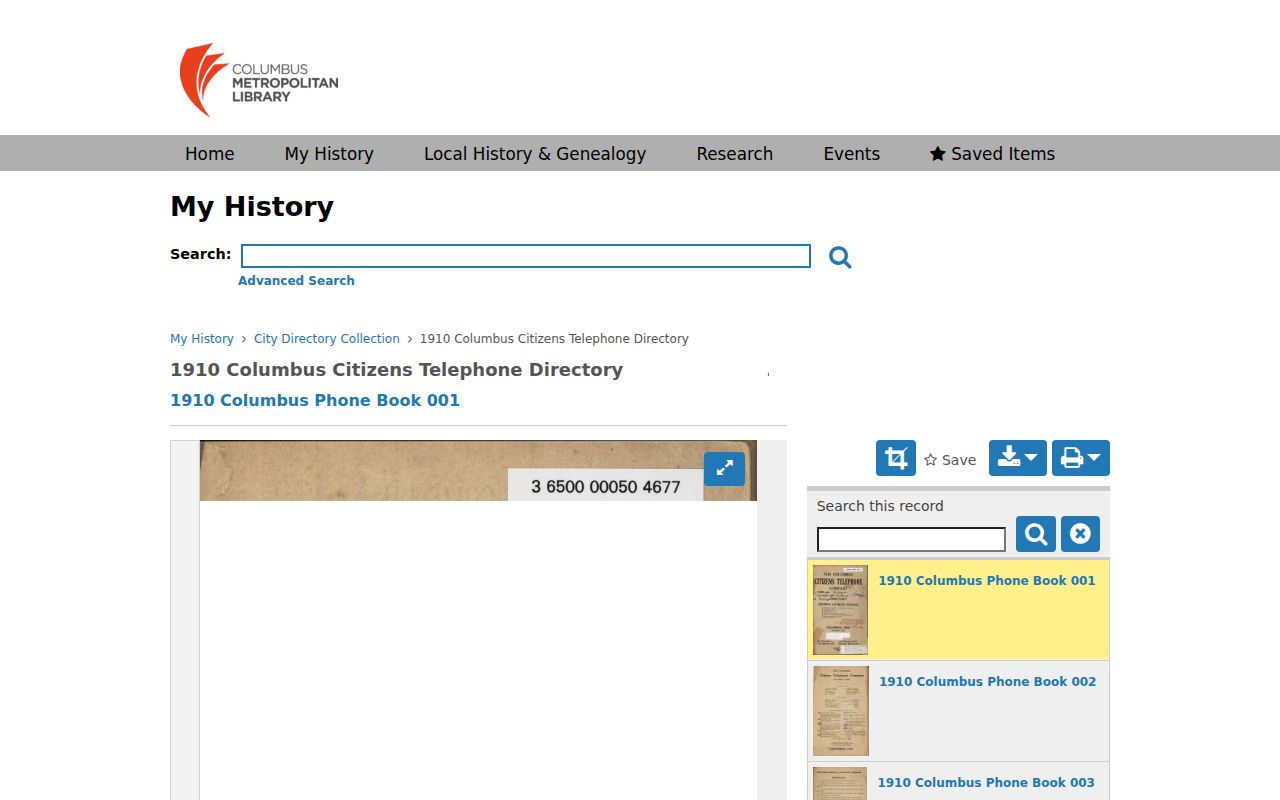
The 1910 Columbus Citizens Telephone Directory includes Canal Winchester, Groveport, and rural lines. It says so outright. When a city directory skips a rural address, this volume is a smart location-aware alternative.
Reading a Madison Township City Directory
An entry is a compact snapshot, not a biography. The 1889–90 Columbus volume shows what one line can carry: surname, given name or initials, a senior or junior notation, wid for a widow, an abbreviated activity, sometimes wks with a workplace clue, h or an address for the home, and a numbered street. One short mark can change the result. Check the volume’s abbreviation material, and read the scan itself rather than trusting OCR alone.
| Name line | Surname, given name or initials, and sometimes senior or junior notation distinguish similarly named people. |
|---|---|
| wid | A widow notation can point to a family event, but it still needs confirmation from a dated vital or probate record. |
| wks | A printed work-place clue can separate two people with the same name without proving a later residence. |
| h and address | The printed residence marker and street number are the dated address clue to compare with maps, deeds, and census records. |
| Phone-book line | Subscriber or business name, exchange number, road or street, and P.O. or R.F.D. label may appear on rural pages. |
- Criss-cross section
- The street-order portion of a directory. CML documents city street aids, but no complete Madison Township rural criss-cross run was verified.
- Householder index
- An index organized around household names rather than every possible person or address.
- Abbreviation key
- The volume’s guide to shortened labels. Photograph or note it before interpreting a historical line.
Madison Township Telephone Directory Years
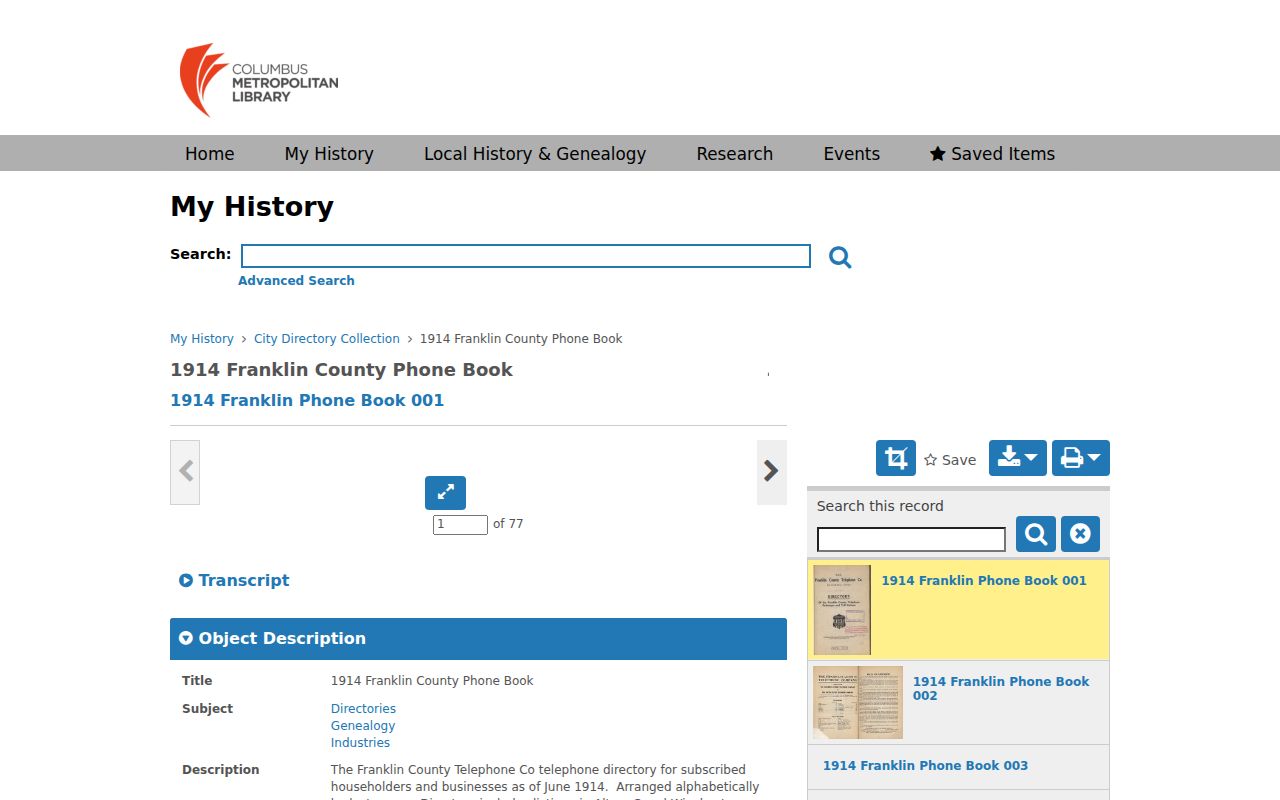
For Canal Winchester, Groveport, and rural lines, the county and vicinity phone books matter most. They form the most concrete directory layer. The June 1914 Franklin County Phone Book devotes pages to the area. Each line gives a subscriber or business and an exchange number. Road names appear too, such as Columbus & Winchester Pike, Washington, Waterloo, Mound, and county-line roads. Postal labels like Canal Winchester P.O. and Groveport R.F.D. round out each entry. Its exchange table counts 530 Canal Winchester subscribers and 241 for Groveport. That is a network count, not a census of all residents.
The 1914 Franklin County Phone Book carries a searcher from a surname to a printed road or delivery label. From there, a researcher can move to a map, a census page, or a Recorder legal description.
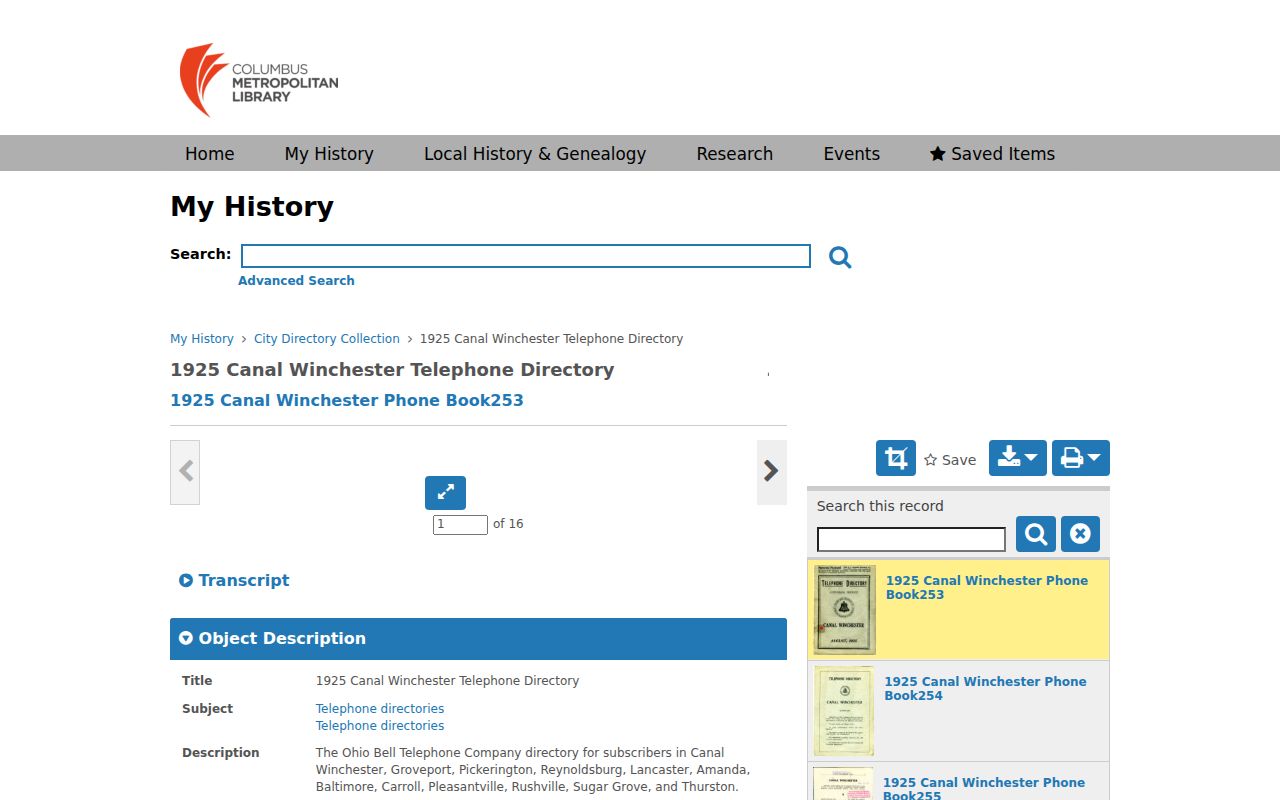
The 1925 Canal Winchester Telephone Directory reaches Canal Winchester, Groveport, Pickerington, Reynoldsburg, and nearby communities. That adds another date point for the same regional search.
Directory Gaps and the 1879 Fire
A missing name can reflect the source, not the person. Franklin County Recorder's historic guide identifies handwritten Deed Indexes covering 1804 through 1913. It explains that an 1879 fire destroyed some records. Most were later reconstructed. For an early household or farm, pair the directory lead with a property description. Follow the surname prefix in the historic index. Note the handwritten index page. Return to the results and enter that page number. Then pull the cited book and page. The fire is a records-history clue. It is never a reason to fill a gap with an assumption.
Franklin County Recorder Official Records Cloud Search is the current portal for recorded documents. Its historic guide's method still works whenever an older name, road, or lot must be tied to a document citation.
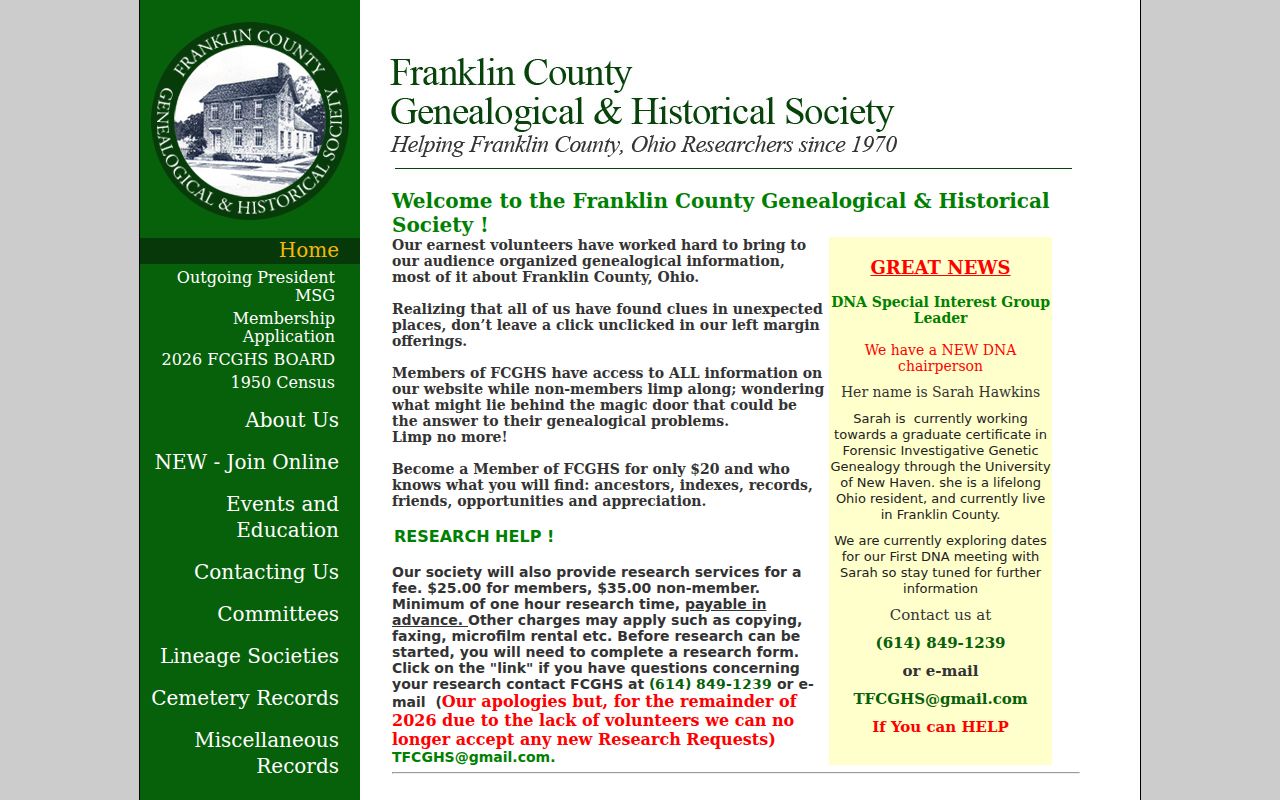
Franklin County Genealogical & Historical Society offers another focused local-history channel. It provides cemetery, surname, township-history, and newspaper leads. The society's page reports no new research requests for the remainder of 2026 because of volunteer capacity.
Trace Madison Township Families by Year
Directory research works best as a timeline. Take one dated entry with a locality or road attached, then move through the directory and phone-book years on both sides of it. At each step, note the spelling, the initials, any widow notation, the road or number, the P.O. label, and the page. Wait for the next directory year before concluding anyone moved. A single missing year proves nothing. Names hold steady here while labels drift between rural routes, Groveport, Canal Winchester, and plain township descriptions. Reading the full run of years shows which shifts were real moves and which were just changes in how the publisher labeled the same household.
- Locate the first dated entry and save the page, locality, and every printed abbreviation.
- Check the nearest later and earlier directory or phone book for spelling, address, and delivery-label changes.
- Pair the decade with the applicable census. The National Archives provides a free name and location search for the 1950 Census; browse by enumeration district when OCR fails.
- Use a Recorder legal description or Auditor parcel only when the address trail supports the property connection.
- For a death, marriage, estate, or name-change question, use the responsible Probate or vital-record channel rather than reading a disappeared entry as proof.
A name that vanishes from a directory could mean a move, a death, an unlisted phone, a changed locality label, or a publication gap. The directory itself cannot tell you which of these happened, so pair it with another record before drawing conclusions.
Cemetery Leads After Directories
Once the directory trail goes cold, lean on library and historical sources. These can pin down a date and place. CML's Columbus News and Obituary Index covers obituaries from 1931 through 1997. Its news abstracts run from 1960 to 1997, with separate browse and keyword ranges. The library's obituary request channel takes up to six free requests each month. It asks for the deceased person, the date, and any newspaper or page detail. Search the index first. Request only the item you truly need.
Madison Township lists five closed cemeteries. It also maintains Middletown Cemetery on Gender Road. The township keeps Mennonite Cemetery on Gender Road near Lehman as well. No official online interment name search exists for them. Cemetery Records and Reports form a permanent township series. A narrow request is a documented fallback. Name the cemetery, the known decedent, and an approximate date. FCGHS's Madison Township cemetery volume is a 148-page historical-society resource. It is not an official interment portal. Use it for leads, not for proof.